


Women’s Day Special: A Woman’s Relationship With What She Wears
Updated: Apr 9
Clothing As A Part Of a Woman’s Story
Women’s Day is often filled with loud celebrations, flowers, speeches, slogans, but it is also a quiet pause. A moment to reflect on the many ways women grow, change, and claim space for themselves. Beyond achievements and milestones, there are softer markers of this journey, choices that may seem ordinary but hold deep meaning. One of them is what a woman wears.
Clothing is rarely just fabric in a woman’s life. It carries memory, expectation, resistance, comfort, and sometimes courage. From outfits chosen for her to clothes she later chooses for herself, what she wears often mirrors where she stands emotionally and personally. Over time, clothing becomes less about appearance and more about expression, expression of confidence, boundaries, identity, and self-respect.
This Women’s Day invites a quieter conversation. Not about fashion trends or rules, but about how a woman’s relationship with what she wears evolves alongside her life. It is a story of choice, sometimes delayed, sometimes challenged, but deeply personal. And in reflecting on it, we honour not only the style, but also the woman behind it.

How a Woman’s Relationship With Clothing Begins
A woman’s relationship with clothing often begins long before she is aware of choice. In childhood, what she wears is usually decided for her by parents, elders, schools, traditions, and unspoken rules. Clothes are chosen for appropriateness, respectability, or practicality, rarely for self-expression. At this stage, clothing is something worn on her, not something that comes from her.
Cultural expectations play a strong role in shaping these early experiences. Certain colours are encouraged, others discouraged. Some silhouettes are considered “suitable,” while others are questioned. A dress may be praised for being “decent,” a top corrected for being “too much.” Slowly, without realising it, a girl learns that clothing can invite approval or criticism, that what she wears can be read, judged, and interpreted by others.
Family influence adds another layer. Hand-me-downs, festive outfits chosen for special occasions, uniforms that dictate sameness, all of these quietly teach her that clothing has rules. Festivals come with specific garments, weddings with expectations, and public spaces with limitations. Even compliments often shape behaviour, being told she looks “good” in something can matter more than whether she feels comfortable in it.
In these early years, clothing becomes a lesson rather than a language. It teaches her how to blend in, how to be accepted, and sometimes how to stay invisible. Yet, within this phase, small sparks of individuality often appear, a favourite colour she reaches for, a dress she feels happy wearing, a refusal she cannot yet explain. These moments, however subtle, mark the beginning of awareness.
This is where the relationship truly starts. It starts with learning what is allowed, what is expected, and eventually, what might be questioned. And from this foundation, a woman slowly begins the journey toward making clothing her own.
From Seeking Approval to Choosing Comfort
For many women, there comes a quiet turning point, a moment when dressing for approval begins to feel heavier than dressing for themselves. This shift is rarely dramatic. It does not arrive as a declaration or a rejection of the past. Instead, it appears gently, in everyday choices, reaching for something easier, repeating an outfit that feels good, letting go of the need to impress.
In earlier years, clothing often carried the weight of external validation. Compliments mattered. Opinions lingered. There was an unspoken awareness of how an outfit might be perceived, whether it looks flattering enough, appropriate enough, or worthy of approval. Dressing becomes a form of negotiation, balancing personal comfort with the expectations of others.
Over time, emotional growth brings clarity. Women begin to recognise that discomfort, physical or emotional, is not a requirement. A heavy outfit may look beautiful, but if it restricts movement or ease, its beauty begins to feel performative. Comfort, once dismissed as secondary, slowly becomes essential.
Choosing comfort is often misunderstood as a lack of effort, when in reality, it reflects self-awareness. It is the decision to prioritise how one feels over how one is judged. A woman may choose a lightweight lehenga for a celebration, not because it is simpler, but because it allows her to move freely, stay present, and enjoy the moment without strain. Such choices speak to inclusive fashion, where design acknowledges real bodies, real emotions, and real experiences.
This phase is also about learning boundaries. Women stop explaining their choices as frequently. They dress in ways that support their lives rather than disrupt them. Comfort becomes a form of confidence, not retreat. The clothes that once felt safe because they pleased others are replaced by clothes that feel right because they align with the self.
In choosing comfort, a woman is not stepping away from style. She is stepping closer to herself. And in doing so, she begins to understand that clothing can support her, physically and emotionally without asking for permission.
When Clothing Becomes a Reflection of Identity
As women grow into themselves, clothing slowly stops being a response to the world and starts becoming a conversation with the self. The need to meet expectations fades, and in its place comes intention. What once felt like dressing up now seems comfortable. This is not about bold statements or visible rebellion.
At this stage, women begin to choose outfits that reflect how they see themselves, not how they wish to be seen. There is less urgency to fit into definitions of elegance, modernity, or tradition set by others. Instead, clothing becomes a way to honour personal rhythm, what feels natural, respectful, and honest. The choices may appear simple on the surface, but they are deeply considered.

Identity is layered, and so is clothing. A woman may dress differently for different roles she inhabits, yet each version feels authentic. There is no pressure to be consistent in style, only consistent in intention. Some days call for softness, others for structure. Over time, women learn that both can coexist without contradiction. This understanding reshapes their relationship with women’s fashion, from something to follow, into something to interpret.
Clothing also begins to reflect values. Fabric choices, silhouettes, and details carry meaning beyond aesthetics. What once felt like a trend now feels irrelevant if it does not resonate. Women become comfortable with repetition, with wearing what they love again and again, because familiarity brings ease. There is pride in knowing what suits not just the body, but the life being lived.
In this phase, dressing becomes an act of self-respect. Clothes are chosen to support confidence rather than manufacture it. There is less performance, more presence. What a woman wears no longer asks for validation, it quietly affirms who she is. And in that affirmation, clothing finds its most powerful purpose.
The Saree as Continuity, Memory and Choice
Few garments carry time the way a saree does. It exists across generations, unchanged in form yet endlessly adaptable in meaning. For many women, the first memory of a saree is not of wearing it, but of watching someone else, mothers getting ready for a function, grandmothers folding silk with care, a familiar rustle of fabric that signalled importance and grace. Long before it becomes personal, the saree becomes familiar.
The saree often represents continuity. It links women across ages, bodies, and stages of life without demanding sameness. The same garment that once belonged to an older generation can be worn differently by a younger one, carrying memory without carrying obligation. In this way, the saree becomes a bridge, between past and present, tradition and individuality.
What makes the saree enduring is not just its cultural significance, but its flexibility. Over time, women learn that there is no single way to wear it, no fixed rule it must follow. Styling choices, how it is draped, paired, or worn, allow room for personal interpretation. A designer saree may hold craftsmanship and elegance, but its true meaning comes alive only when a woman makes it her own.
For many, choosing to wear a saree is no longer about duty. Some wear it to feel rooted, others to feel powerful, and some simply because it feels right in that moment. A Saree accommodates change, of age, body, and self, without asking a woman to give anything up.
In this sense, the saree becomes a choice rather than a symbol imposed by tradition. It carries memory, but it also allows freedom. And when a woman chooses it on her own terms, the saree stops being a marker of expectation and becomes an expression of continuity.
Even the saree a woman chooses to wear has a story behind it. The story either lies on the design and embroidery of the saree itself, or it is an emotional memory linked to our mothers and grandmothers.
Bridal Wear as a Personal Decision, Not a Role
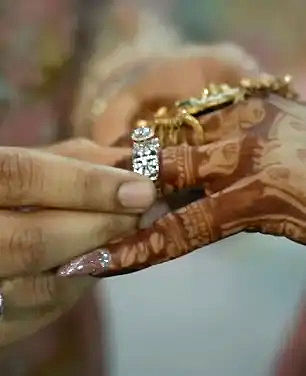
Becoming a bride is often spoken about as a transformation, but for many women, it is simply a transition. The label changes, the ceremonies begin, yet the person remains the same. Bridal wear, in this moment, holds immense symbolic weight, but it does not have to erase individuality to feel meaningful.
For generations, bridal clothing was designed around expectation. Heavy fabrics, elaborate embroidery, and fixed ideas of what a bride should look like left little room for personal voice. The outfit became a costume of sorts, one that marked an occasion but sometimes muted the woman within it. Today, that narrative is quietly shifting.
Modern women are approaching bridal wear with intention rather than compliance. They ask different questions, not “What is expected of me?” but “What feels like me?” For some, this means choosing a simple saree over a heavily layered ensemble because it feels honest and grounding. For others, it means embracing bridal couture on their own terms, selecting details that reflect personality, comfort, and meaning rather than excess.
There are women who have gently refused tradition without drama. An aunt who chose a plain silk saree for her wedding because she wanted to recognise herself in the mirror. A bride who declined heavy jewellery.
Bridal clothing, when chosen consciously, becomes an extension of identity rather than a role to perform. It allows a woman to step into marriage without stepping away from herself. The garment marks the moment, but it does not define the woman. It carries significance without demanding sacrifice.

In this way, bridal wear becomes deeply personal. It is not about fitting into a mould, but about honouring a milestone with integrity. And when a woman chooses what feels true to her on such an emotionally charged day, she affirms something quietly powerful, that marriage may change her life, but it does not need to change who she is.
When Women Choose What Feels True To Them
There comes a stage when women stop dressing for moments and start dressing with intention. These choices are not always visible to others, but they are deeply felt. Whether it is a wedding, a ceremony, or a personal milestone, what a woman chooses to wear begins to reflect how well she knows herself.
Choosing what feels true is often a deliberate act. It means pausing before saying yes to what is expected, and asking instead what aligns. A woman may choose an outfit that feels understated in a room full of grandeur, or repeat a silhouette she loves despite changing occasions.
This clarity also changes how women relate to ideas like sustainable fashion. The focus shifts from accumulation to intention, wearing fewer things, but wearing them with meaning. Even when surrounded by trending styles, women who dress from a place of authenticity are guided less by what is new and more by what feels lasting. Trends may pass through their lives, but they do not define them.
In these moments, appearance becomes secondary to presence. Clothing supports the experience. A woman who chooses what feels right is not trying to be remembered for how she looked, but for how she carried herself.
When women choose what feels true to them, their clothing becomes quiet but powerful.
A Couture Perspective on Women and Choice
Couture spaces often witness stories long before they see garments. When women step into these spaces, they do not arrive only with measurements or references, they bring memories, preferences, hesitations, and quiet convictions. The process becomes less about creating something impressive and more about understanding what feels right for the woman who will wear it.
In these moments, choice takes centre stage. Women speak about comfort, movement, and meaning as much as design. They describe how they want to feel, not just how they want to look. Couture, at its most thoughtful, listens. It allows room for individuality, recognising that no two women carry their stories the same way.
At WNW, this understanding forms the foundation of design. The focus is not on shaping women to fit a garment, but on shaping garments to honour women. Each piece begins with conversation, about lifestyle, emotion, and personal expression. This approach turns couture into something intimate, where clothing becomes an extension of self rather than an expectation to live up to.
This is where fashion with heart finds its place. Outfits then become timeless. In such spaces, a woman’s preference is understood.
A couture perspective grounded in choice recognises that what a woman wears is never separate from who she is. And when design honours that truth, clothing transforms into something meaningful, held not just on the body, but in memory.
Why This Relationship Matters on Women’s Day
Women’s Day is often about recognition, of strength, resilience, and progress. But it is also an opportunity to acknowledge the quieter journeys that shape a woman’s life. A woman’s relationship with what she wears may seem ordinary, yet it holds layers of choice, resistance, growth, and self-understanding.
What women wear often reflects where they are emotionally and personally. There are phases marked by compromise, phases defined by discovery, and phases grounded in confidence. Clothing becomes a subtle record of these transitions. It mirrors how much space a woman feels allowed to take, how comfortable she is being seen, and how deeply she trusts her own voice.

On Women’s Day, looking at clothing through this lens shifts the conversation away from appearance and toward agency. It reminds us that style is not superficial when it is rooted in choice. For many women, deciding what to wear has been shaped by expectations, negotiations, and learning to say no. Honouring these decisions means recognising autonomy in its most everyday form.
This relationship matters because it reflects freedom. The freedom to dress for oneself, to evolve without explanation, and to express identity without permission. These are personal victories, often unnoticed, but deeply earned.
By acknowledging this connection on Women’s Day, we honour women not for how they look, but for how consciously they choose. And in doing so, we recognise that self-expression, in all its quiet forms, deserves space, respect, and reflection.
Conclusion: More Than What She Wears
A woman’s relationship with clothing is never just about fabric, colour, or form. It is shaped by years of learning, unlearning, compromise, and choice. What she wears carries traces of who she was, who she was expected to be, and who she has chosen to become. In this way, clothing becomes part of her larger story, quiet, evolving, and deeply personal.
On Women’s Day, reflecting on this relationship allows us to look beyond surface-level celebration. It reminds us that freedom often shows up in everyday decisions, in choosing comfort over approval, authenticity over expectation, and meaning over performance. These choices may seem small, but they speak of awareness and self-respect earned over time.
To honour women is not only to admire how they dress, but to respect the intention behind those choices. The courage to choose differently, the confidence to remain true, and the grace to evolve without explanation are all part of this journey.
At the end, a woman’s right to choose what she wears matters a lot. And that right, exercised quietly and consistently, is worth recognising today and always.
Comments